

Key Takeaways
SAP Invoice Management is a central solution for automating and optimizing accounts payable invoice processing within SAP systems. In particular, SAP Vendor Invoice Management (VIM) by OpenText enables companies to reduce manual tasks, shorten processing times, and significantly increase transparency in finance operations.
Through intelligent technologies such as OCR, rule-based workflows, and AI-driven data recognition, SAP Invoice Management becomes a key component of modern finance transformation. Companies benefit from increased efficiency, lower costs, and improved compliance.
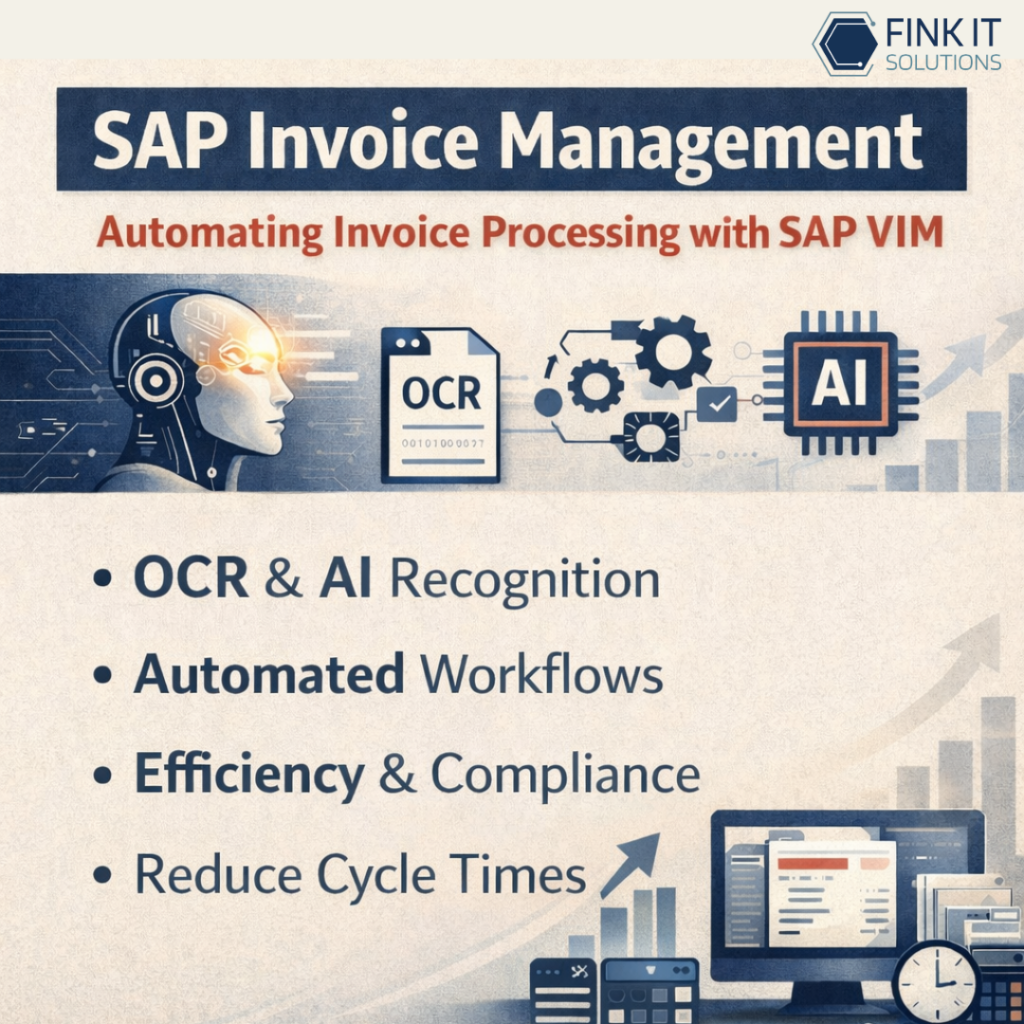
Table of Contents
- What is SAP Invoice Management (SAP VIM) and how does it support automation?
- What benefits does SAP VIM offer for companies in digital invoice processing?
- How does SAP VIM work on S/4HANA (On-Premise vs. Private Cloud)?
- What are the differences between SAP VIM in On-Premise and Private Cloud environments?
- How can SAP VIM be seamlessly integrated into existing S/4HANA landscapes?
- What AI features does SAP VIM offer to optimize invoice processing?
- What best practices exist for implementing SAP VIM in S/4HANA projects?
- Conclusion, Summary & Outlook
- FAQ
- Useful Links & Sources
What is SAP Invoice Management (SAP VIM) and how does it support automation?
SAP Invoice Management (particularly SAP VIM) is a solution for the automated processing of incoming invoices within SAP ERP and S/4HANA.
The solution covers the entire process:
- Invoice receipt (EDI, PDF, paper)
- Digitization and data capture
- Validation and verification
- Approval workflows
- Posting and archiving
According to the presentation, SAP Invoice Management enables end-to-end automation from invoice receipt to payment.
Most importantly, all invoices—regardless of format—are processed in a standardized and unified way.
What benefits does SAP VIM offer for companies in digital invoice processing?
SAP Invoice Management offers numerous advantages:
- Reduction of manual tasks
- Faster processing times (e.g., ~2.8 days for top-performing companies)
- Increased transparency
- Prevention of errors and duplicate payments
- Optimization of cash discounts
In addition, SAP Invoice Management improves collaboration and enables detailed reporting.
Companies benefit from improved process quality and more efficient finance teams.
Further information on SAP process optimization can be found here:
👉 SAP Vendor Invoice Management by OpenText – Fink IT-Solutions
👉 Blog für S/4HANA, SAP BTP, OpenText, E-Rechnung und Neptune – Fink IT-Solutions
How does SAP VIM work on S/4HANA (On-Premise vs. Private Cloud)?
SAP Invoice Management can be used in both traditional on-premise environments and in S/4HANA Private Cloud.
Core principles:
- Integration into SAP standard processes (e.g., MIRO)
- Use of workflows and Fiori apps
- Access to SAP master data and posting logic
In both scenarios, SAP Invoice Management remains tightly integrated into the SAP architecture and leverages existing processes.
What are the differences between SAP VIM in On-Premise and Private Cloud environments?
The use of SAP Invoice Management varies depending on the operating model:
On-Premise:
- High flexibility
- Custom enhancements
- Full system control
Private Cloud:
- Standardized processes
- Reduced maintenance effort
- Faster updates
In both models, the functionality of SAP Invoice Management remains largely the same, but operations and governance differ.
How can SAP VIM be seamlessly integrated into existing S/4HANA landscapes?
The integration of SAP Invoice Management takes place directly within SAP:
- Seamless integration with the SAP system
- Integration into SAP FI/MM
- Connectivity to business networks (e.g., EDI, Peppol)
The solution accesses SAP data and processes invoices directly within the system.
For companies, a well-defined integration strategy is recommended:
👉 Meeting mit Niklas Reisinger
👉 Blog für S/4HANA, SAP BTP, OpenText, E-Rechnung und Neptune – Fink IT-Solutions
What AI features does SAP VIM offer to optimize invoice processing?
Modern SAP Invoice Management solutions leverage AI for automation:
- Automatic extraction of invoice data
- Intelligent account assignment (smart coding)
- Semantic matching of line items
- Detection of payment terms
The presentation demonstrates that AI is used across all process stages—from data capture to approval.
Examples include:
- Smart Material Determination
- AI-based business rules
- Automated task generation
These features increase touchless processing rates and reduce errors.
What best practices exist for implementing SAP VIM in S/4HANA projects?
For a successful implementation of SAP Invoice Management, the following best practices are essential:
- Analyze existing processes
- Standardize invoice formats
- Use preconfigured rules
- Involve all stakeholders
- Train end users
An end-to-end approach is critical:
The entire process—from invoice receipt to payment—should be optimized.
Conclusion, Summary & Outlook
SAP Invoice Management is a key component in the digital transformation of finance.
The solution enables:
- Process automation
- Cost reduction
- Improved data quality
With AI and modern integration capabilities, SAP Invoice Management will continue to evolve and support organizations in becoming data-driven finance functions.
FAQ
How does SAP Invoice Management improve efficiency?
Through automation, reduced manual effort, and faster processing times.
How does AI improve touchless processing rates?
AI identifies patterns, automates postings, and reduces errors.
Which companies benefit most from SAP Invoice Management?
Companies with high invoice volumes and complex processes.